 Illustrative photo
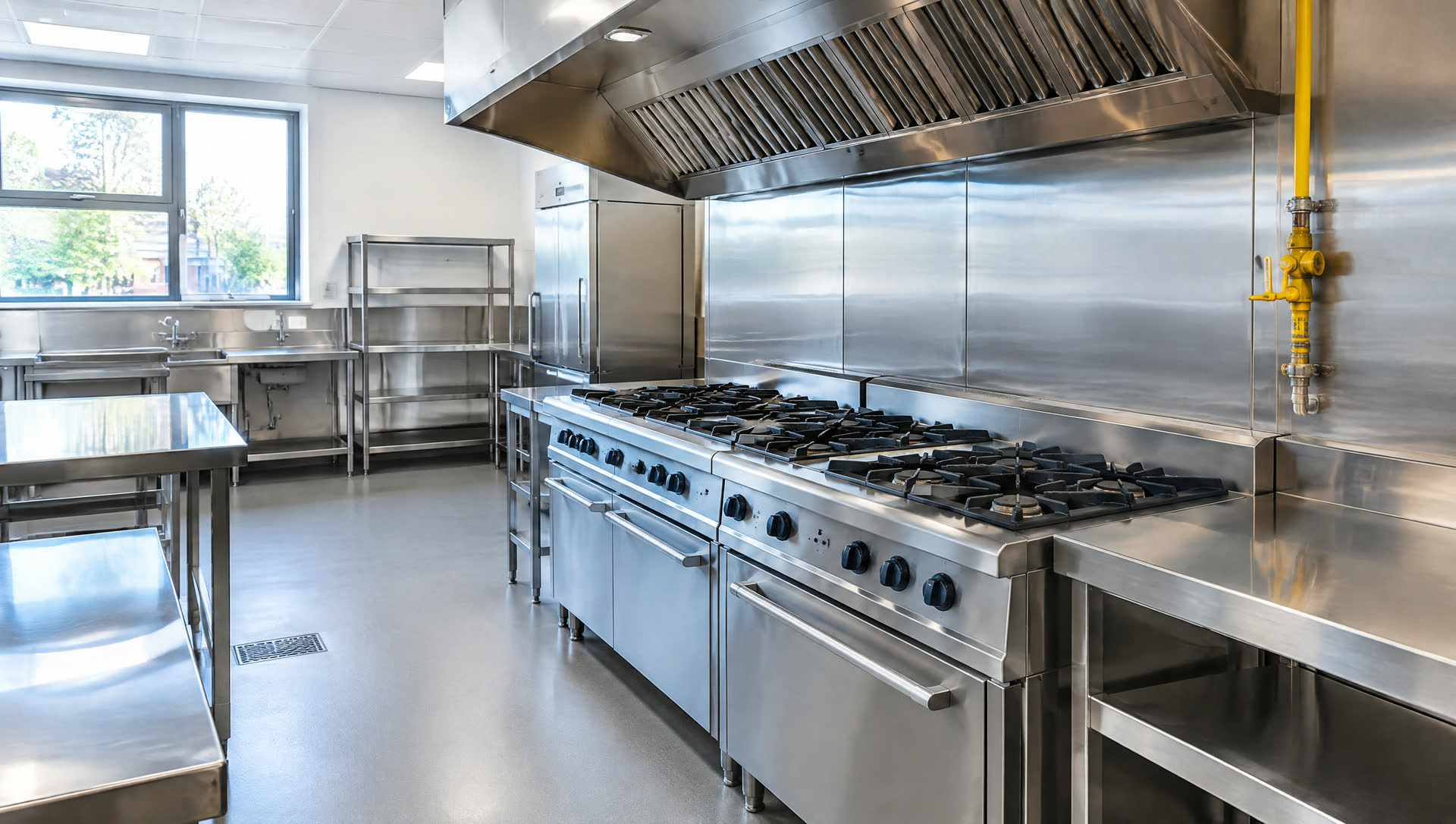
If your school, hotel, care home or restaurant cooks with gas, the kitchen is part of your gas safety duty, not separate from it. Here is what the law and HSE guidance expect, and what a commercial kitchen gas inspection (often recorded on a form known as a CP42) should cover.
The law that applies
Gas work in commercial kitchens is covered by the Gas Safety (Installation and Use) Regulations 1998. Regulation 35 requires employers and the self-employed to keep gas appliances, flues, pipework and safety devices in a safe condition. HSE's catering guidance (CAIS23) adds the general duties of the Health and Safety at Work etc. Act 1974 to protect staff and anyone else affected.
Who can do the work
Installation, repair, inspection and maintenance must be done by a Gas Safe registered business, and the engineer must hold up-to-date qualifications for the type of catering equipment involved. HSE says catering employers should check this before work starts, by asking to see the engineer's Gas Safe ID card and confirming it with Gas Safe Register on 0800 408 5500. HSE also warns that people sometimes use out-of-date certificates.
How often should a kitchen be checked?
HSE's guidance is to follow the manufacturer's recommendations, but as a general rule, annual inspections are a reasonable minimum, with repairs carried out as needed. Busy kitchens may need more frequent servicing. Where staff accommodation or other residential rooms are on site, the landlord's annual gas safety check also applies to those areas.
What the inspection should cover
- Each gas appliance: ranges, ovens, fryers, griddles and combination ovens, including flame supervision devices that cut the gas if a flame goes out
- Gas pipework, connections and flexible hoses, with a tightness test
- The emergency gas isolation valve, which staff must be able to reach and use
- The ventilation system and its interlock with the gas supply
- Restraints and castor locks on mobile equipment
- A written record of what was checked, what passed and what needs putting right
Why the ventilation interlock matters
Cooking produces heat and combustion products that the extraction system has to remove. HSE's guidance, based on British Standard BS 6173, is that an interlock should be fitted between the mechanical ventilation and the gas supply, so that if the fans fail, the gas to the appliances shuts off. Manual bypasses of an interlock are not permitted. BS 6173 is not retrospective, so many older kitchens have no interlock; HSE asks owners of those kitchens to assess the risk and control it rather than assume it is fine.
What your staff can do day to day
HSE expects kitchen staff to be trained to use the equipment and to spot obvious faults: damaged pipework or connections, flame safety devices that don't work, missing restraints, and any smell of gas. Everyone should know where the isolation valve is and what to do in an emergency. Staff can reconnect plug-in gas connections after cleaning if they are competent to do so, but anything more is gas work for a registered engineer.
Bringing it into one visit
For sites with both boiler plant and a kitchen, it is simpler and cheaper to inspect both on the same visit. That is why every Osmel PPM package includes commercial kitchen gas testing with CP42 documentation where a kitchen is covered.