 Illustrative photo
When commercial boilers reach the end of their life, the choice is no longer simply "new gas boilers". Most buildings now have three realistic options. Here is how they compare, and what grant help is available as of October 2026.
Option 1: new gas condensing boilers
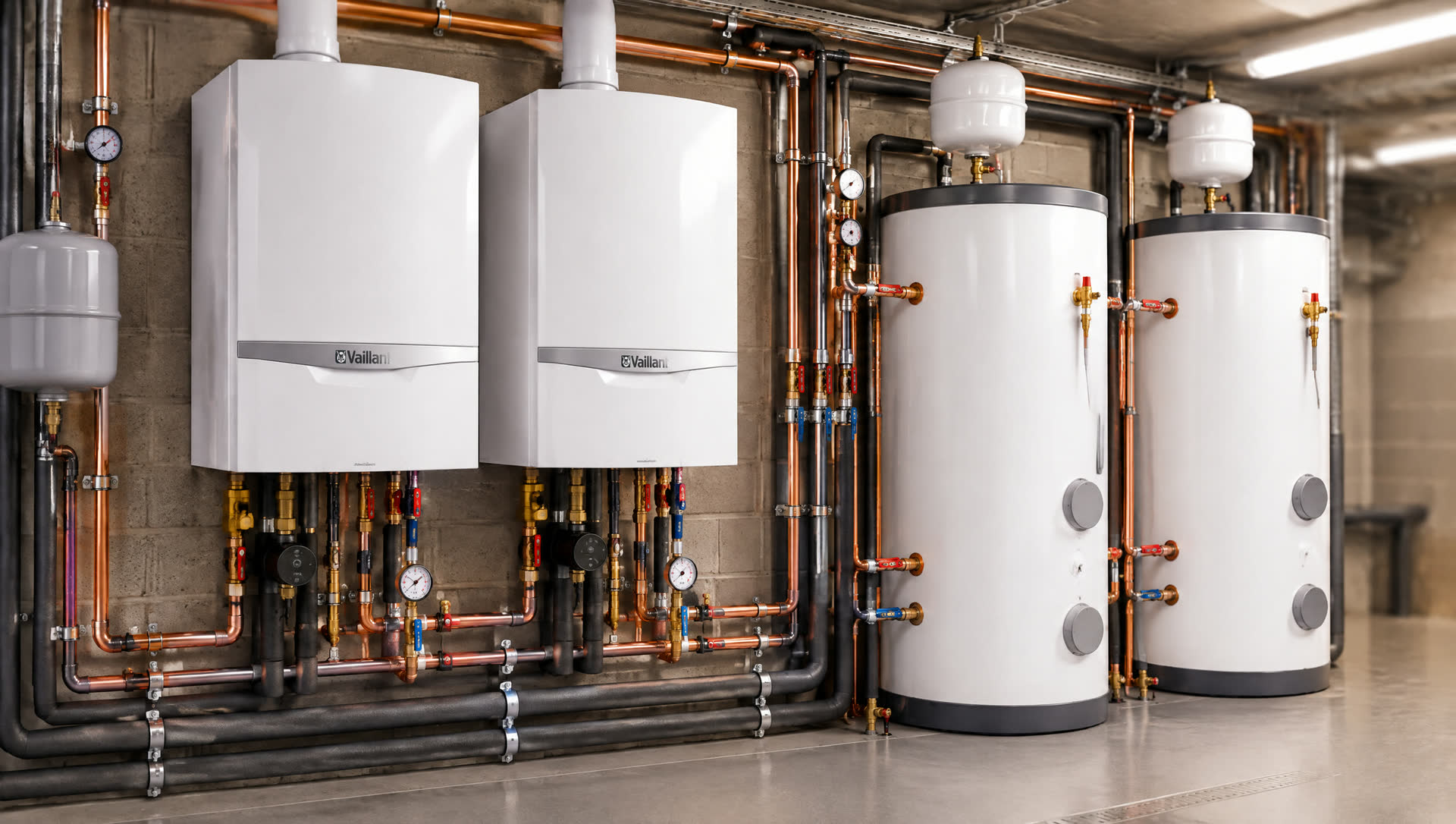
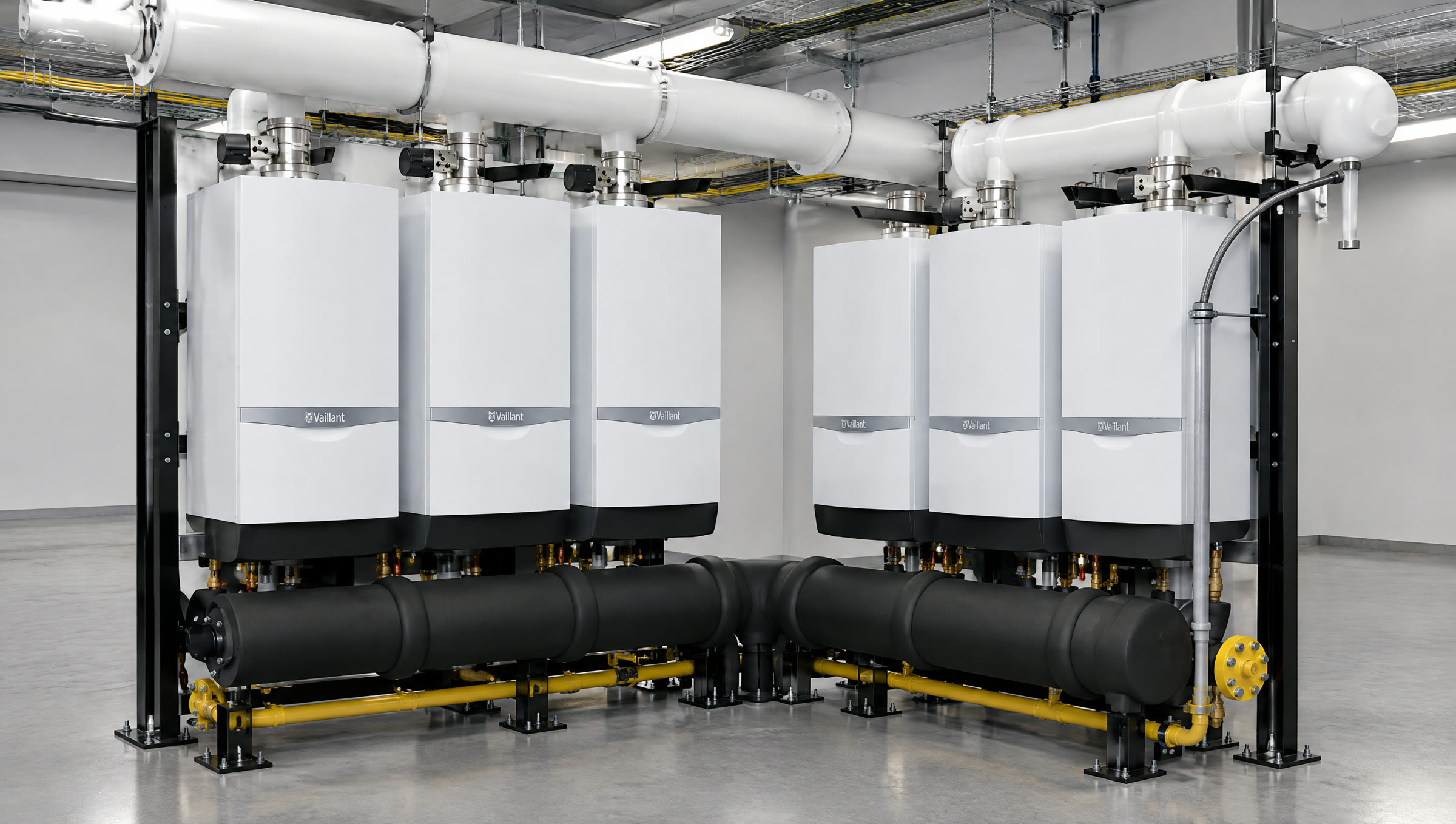
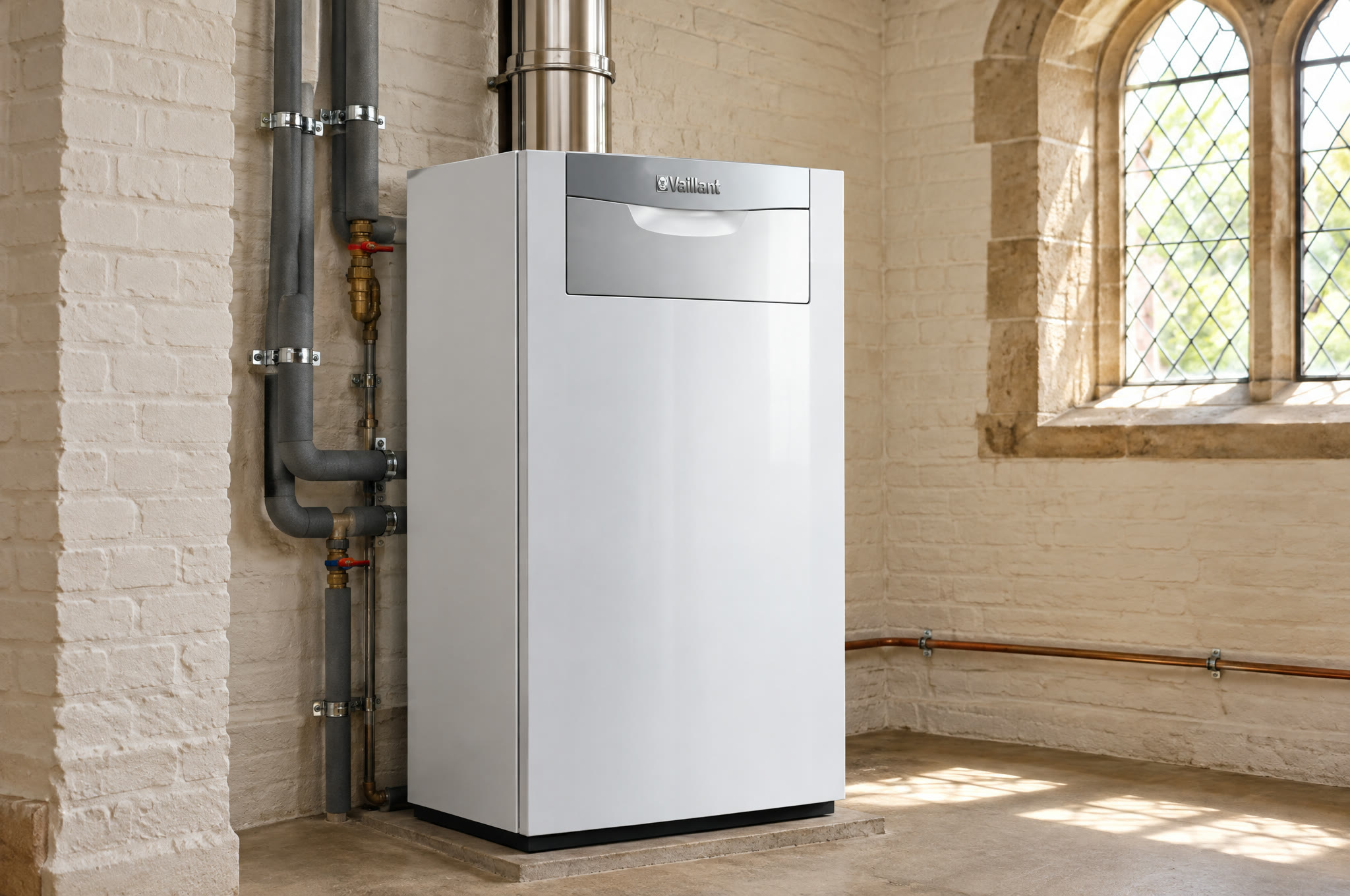
Replacing old boilers with modern condensing boilers, usually in a cascade, is still the most common choice. It is quick, it fits existing pipework and radiators, and the capital cost is usually the lowest of the three. Modern boilers are also far more efficient than plant installed 20 or 30 years ago, especially when they are sized to the building's real heat demand rather than matched to whatever was there before.
Suits: buildings that need a reliable replacement now, with limited budget or limited space, or where the electrical supply cannot yet support a heat pump.
Option 2: heat pumps
A heat pump moves heat from the outside air or the ground into the building using electricity, with no gas burned on site. It works best with lower flow temperatures, so radiators, pipe sizes and insulation all need checking. Some buildings need larger radiators or other changes to stay comfortable. The building's electrical supply also needs checking before anything is ordered.
Suits: organisations with carbon targets, buildings with good insulation or a planned refurbishment, and sites where grant funding is available.
Option 3: hybrid systems
A hybrid system pairs a heat pump with gas boilers. The heat pump carries the load for most of the year, and the boilers step in during the coldest weather or for high-temperature hot water. It can be a practical stepping stone for older buildings that cannot run on a heat pump alone yet.
Suits: buildings that want to cut gas use now without a full system redesign.
What the Boiler Upgrade Scheme covers for businesses
The government's Boiler Upgrade Scheme is open to buildings used for a business, as well as homes, in England and Wales, as long as you own the property and are replacing fossil fuel heating. According to GOV.UK (checked 31 October 2026):
- £7,500 towards an air source or ground source heat pump
- an extra £1,500 until March 2027 if the building is heated by oil or LPG and has no mains gas connection
- £5,000 towards a biomass boiler (rural, off-gas properties only)
- one grant per property
Two limits matter for commercial buildings:
- Size. The maximum capacity is 45kWth for a single system, or 70kWth where more than one heat pump is installed together. That suits small offices, shops and similar buildings, but most larger plant rooms are well beyond it.
- Hybrids are excluded. You cannot get the grant for a hybrid system, such as a gas boiler working with an air source heat pump.
The heat pump must also be installed and commissioned within 120 days of the grant application, by an MCS certified installer.
How to decide
The right answer depends on the building, not on a brochure. A good survey looks at:
- the building's real heat demand, which is often well below the size of the existing boilers
- the age and condition of the pipework, radiators and controls
- the electrical supply and the space available inside and outside
- how the building is used, and when work can happen without disruption
- budget, running costs and any carbon targets
We install Vaillant commercial boilers and design plant rooms to suit each building.